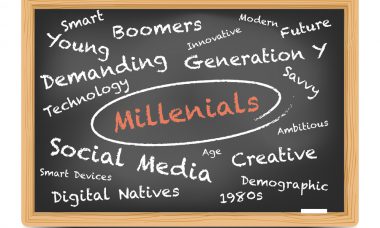
Disclaimer: This is an updated writing of a post I wrote 8 years ago for a blog that no longer exists online, but the generational theme has never been so current….
Read More
Aaron Kim
Aaron Kim is the Head of Digital Social Collaboration at the Royal Bank of Canada, and led the efforts to bring social business and social collaboration to an organization of 79,000 employees. He’s also been a public speaker at several events across the globe, from the Web 2.0 Expo to JiveWorld, from Singapore to Barcelona.
He has a passion for innovation and for making work smarter, more meaningful and rewarding to all. Born and raised in Brazil, to a Korean father and Japanese mother, he also volunteers in several diversity initiatives, inside and outside RBC.
In the past, he worked as a consultant both at IBM Canada and Unisys Brazil, having played the roles of solutions architect, Basel II analyst, performance engineer, Java programmer, Unix administrator and environmental biologist.
He holds an MBA from the University of Toronto, and a bachelor’s degree in Biology from the Universidade de São Paulo.
He lives in Toronto, Canada, is married to Tania and have a son, Lucas.

Cryptocalypse Now: hacking from the future or a Y2K déjà-vu?
If you have not heard about quantum computing yet, you will very soon, from both likely and unlikely sources, including Canada’s Prime Minister Justin Trudeau. Staged or not, the explanation provided by Trudeau…
Read MoreMachine Learning: a digital Cambrian explosion about to happen
Evolution as understood by Charles Darwin was supposed to happen very slowly and gradually. That’s why he, and many other scientists, were puzzled by an event that happened about 540 million…
Read MoreAn undigital revolution of sorts
Even though binary representation is nothing new, being invented in the 17th century, and early reasonable manifestations in Ancient Egypt and China – think Yin and Yang as one of the oldest…
Read MoreDigital futurism, UX, and streams: tomorrow will look like yesterday
Having been in the field of emerging technologies for many years now, often people ask me “what is next? What will technology look like many years from now?” My answer invariably is: “I…
Read MoreDigital casualties: analog talent and foraging behavior
This is the fourth and final post on “digital casualties.” Check out the first three posts here, here, and here. As all things digital get most attention these days, there may be…
Read MoreDigital casualties: digital diversity at the workplace
This is the third “digital casualties” post. You can read the first two here and here. As we transition to a workplace increasingly reliant on the so-called digital technologies, where…
Read MoreDigital casualties: a new trust awakens
Last month, we discussed how privacy became a casualty of the digital revolution: like immunization, we depend on others to protect our personal privacy, and that dependency is making us…
Read MoreDigital casualties: protecting your privacy is not fully In your hands
Last year, the Harvard Innovation Lab produced an interesting video showing the evolution of the desk from 1980 to 2015. That video showed the dramatic transition that happened from atoms…
Read MoreDigital learning and the invisible Digital Divide
As organizations embrace mobile, social, big data, and cloud solutions, and as digital literacy becomes a prerequisite for the workplace, a very large contingent of people is silently left behind…
Read More